ServicesCommercial Roof Repair
Commercial Roof Repair in Purcell
A leak over a sales floor, office or storage room costs you more every day it drips. We find where the water is getting in, fix that spot properly and tell you straight whether the rest of the roof has years left in it.
Repair work for flat, low-slope and metal roofs
Most commercial roofs are not shingles. They are TPO or EPDM membrane, modified bitumen, built-up tar and gravel, or metal panels. Each one fails in its own way, and the fix has to match the material. A patch that works on EPDM will not hold on TPO.
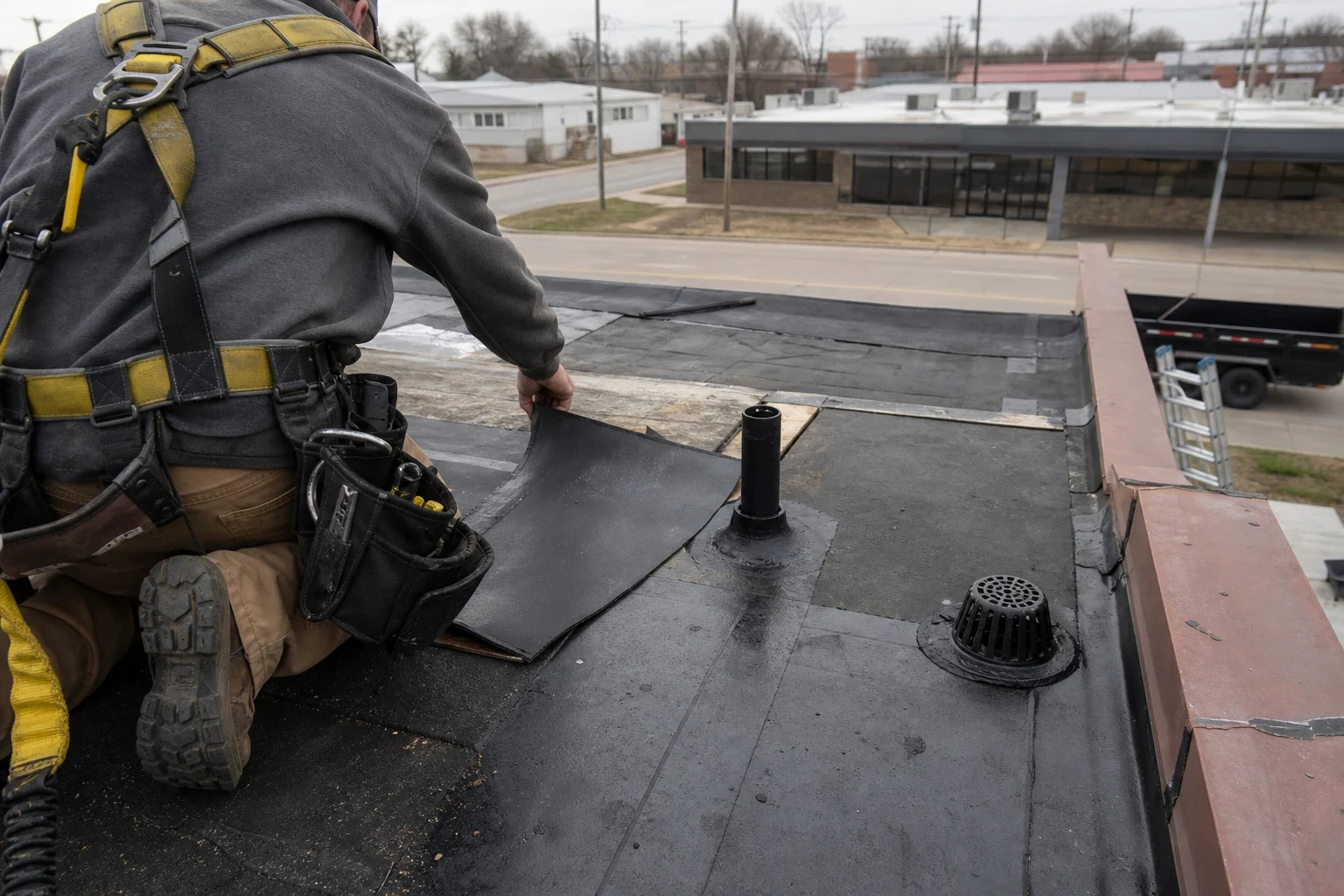
Flat roofs hide leaks well. Water can slip in at one seam, run across the deck, soak the insulation and finally drip out several feet from where it got in. We follow that path back to where it starts instead of sealing the first soft spot we find.
After a hail or wind storm, a quick look keeps a small tear from turning into wet insulation and a sagging deck. Some roofs are past patching. When yours is, you hear it from us up front, along with what commercial roof replacement would involve, and the call stays yours to make.
What a commercial repair visit covers
- Leak tracing
- We walk the roof and check the areas that fail most: seams, penetrations, curbs and edges. Where needed, we check the deck and insulation for trapped water.
- Seam and membrane repair
- Open seams on TPO get heat-welded. EPDM gets cleaned, primed and patched with matching material. Modified bitumen and built-up roofs get repaired with compatible layers.
- Flashing at walls, curbs and pipes
- Parapet walls, HVAC curbs, vent pipes and skylights are where most leaks start. We reseal or replace the flashing so it sheds water again.
- Drains, scuppers and ponding
- Clogged drains and scuppers leave water sitting on the roof, which wears out the membrane fast. We clear them and point out low spots that keep holding water.
- Metal panel fixes
- On metal buildings we replace backed-out or rusted fasteners, reseal laps and treat rust before it eats through.
- Photos and a plain report
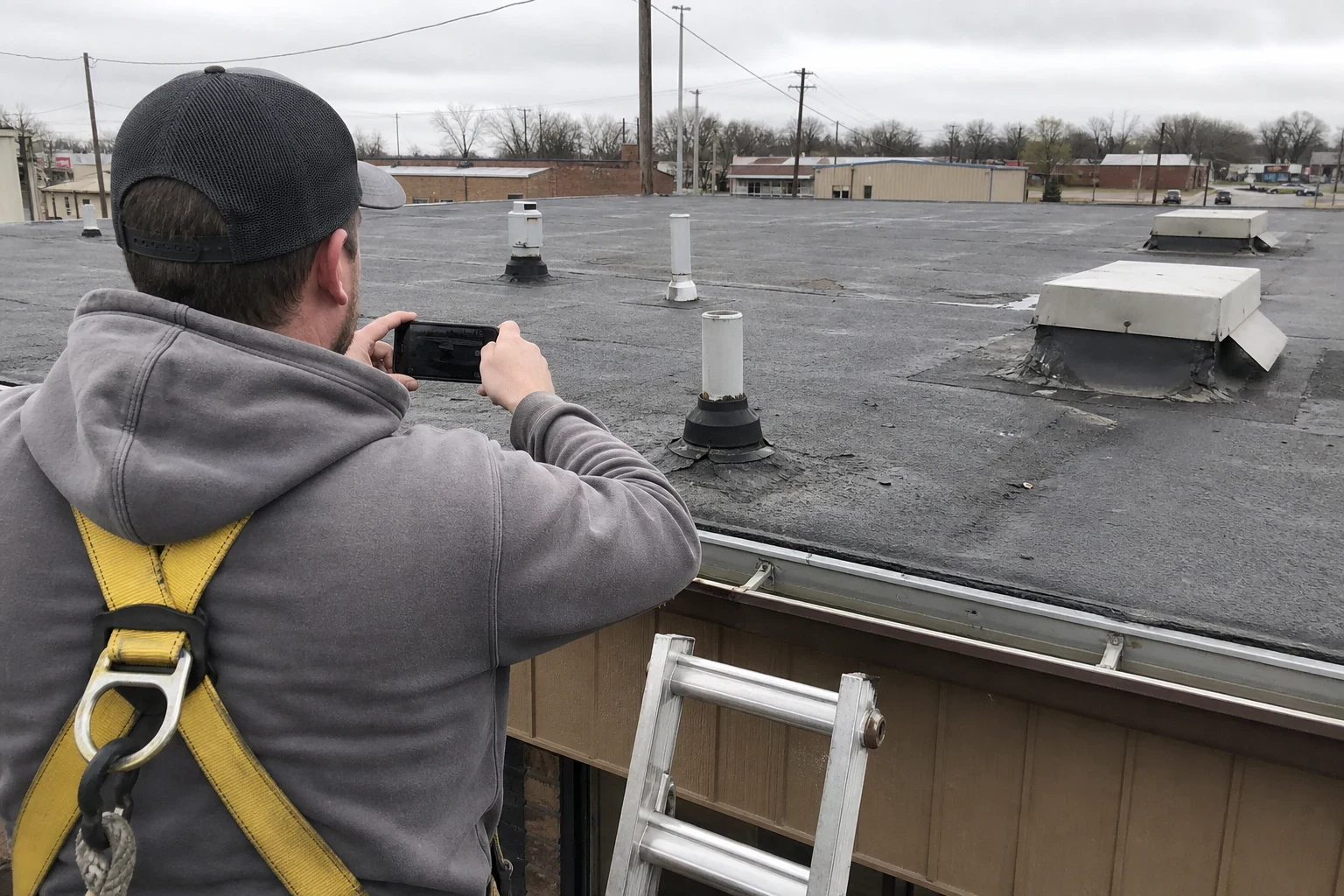
- You get photos of what we found and what we fixed, plus a short list of anything we saw that will need attention later.
Signs your building's roof needs repair
Ceiling tiles with stains
Brown rings or sagging tiles mean water is already through the roof and the insulation. The source may be several feet away.
Water that sits for days
Ponding that is still there two days after rain wears out the membrane and adds weight to the deck.
Blisters, bubbles or splits
Bubbles in the membrane mean trapped moisture. Splits and cracks let water straight in.
Loose edges after wind
Peeled-back edge metal or membrane lifting at the perimeter can let a strong Oklahoma wind get under it and tear off more.
Rust and popped screws
On metal roofs, rust streaks and fasteners standing proud are early warnings of leaks at every screw hole.
How a repair job runs
- 1
You tell us what is happening
On the phone we ask where the leak shows up, when it started and what kind of roof you have. That helps us show up with the right materials.
- 2
We inspect and trace the leak
We get on the roof, find the source and check the surrounding area. We work around your hours so customers and staff are not in our way or theirs.
- 3
You get a clear answer
We show you the photos and explain what needs fixing now and what can wait. You get a written estimate before any work starts.
- 4
We make the repair and clean up
We fix the problem with material that matches your roof, clear the debris and check the area once more before we leave.
What moves the price of a commercial repair
Every building is different, so we price the repair after we have seen the roof. The estimate is written out line by line so you know what each part costs. If we find something new once work starts, we stop and talk to you before going further.
- Roof material
- TPO, EPDM, modified bitumen, built-up and metal each take different materials and methods. Some are quicker to repair than others.
- How far the water has spread
- A dry deck under a small tear is a simple fix. Wet insulation has to be cut out and replaced, which adds time and material.
- Access to the roof
- Roof height, ladder or lift needs, and whether there is a roof hatch all change the labor involved.
- Number of problem spots
- One failed curb flashing is a short job. Several leaks across seams, drains and penetrations take longer to fix right.
Commercial roof repair questions
Something not covered here? (405) 422-9816
Can you repair the roof without closing my business?
In most cases, yes. Repair work happens up top and outside. We plan around your open hours and keep walkways and entrances clear. If a repair has to happen over a busy area, we talk with you first about timing.
Should I repair or replace my flat roof?
If the problem is in a few spots and the rest of the membrane is sound, repair makes sense. If seams are failing all over, insulation is wet in large areas or the roof has been patched again and again, replacement is usually the better spend. We tell you which one we see and why.
Will a patch hold on an old roof?
A good patch holds as long as the material around it does. On an aging roof, we will tell you honestly if the repair is buying you a few seasons rather than many.
Do you work on metal buildings?
Yes. We replace worn fasteners, reseal panel laps and ridge caps, and treat rust spots. Those are the most common leak points on metal roofs.
Our roof was hit by hail. What should we do first?
Take photos of any interior leaks and keep the area dry. Then have the roof looked at before the next rain. We document the damage with photos, which helps if you file a claim, and we can explain how the insurance process usually goes. The adjuster makes the coverage decision.
Get the leak stopped before the next rain
Tell us what you are seeing and what kind of building it is. We will set a time to come out, find the source and give you a written estimate.