ServicesCommercial Roof Replacement
Commercial Roof Replacement in Purcell
When patches stop holding on your flat or low-slope roof, we replace it. We cut core samples, show you what is wet, and lay out a written scope before any work starts. Then we plan the work so your doors stay open.
When a commercial roof needs to come off
Most commercial roofs fail slowly. Seams open, insulation soaks up water, and the leaks move around until nobody can say where they start. At that point another patch just buys a few weeks.
We look at what is under the membrane before we tell you anything. If the insulation is dry and the deck is sound, a repair or a recover may be the honest answer, and our commercial roof repair page covers that work. If water has gotten into the layers below, replacement is usually the cheaper path over time.
After a hailstorm, a lot of owners get told they need a new roof. Sometimes that is true. We check for real fractures and punctures in the membrane, not just dents in the metal trim, so you know which damage matters before you file anything.
What the job includes
- Core cuts and moisture check
- We cut small samples to count layers and see if the insulation is wet. Each cut gets patched the same day.
- Tear-off or recover decision
- Most building codes allow no more than two roof layers. If you already have two, or the old one holds water, it comes off down to the deck.
- Deck repair
- Rusted metal deck or soft wood gets replaced before anything goes over it. We photograph it and tell you what we found.
- Insulation and drainage
- New insulation goes down, often tapered so water runs to the drains instead of sitting in low spots. Ponding water is one of the main reasons flat roofs wear out early.
- Membrane and flashing
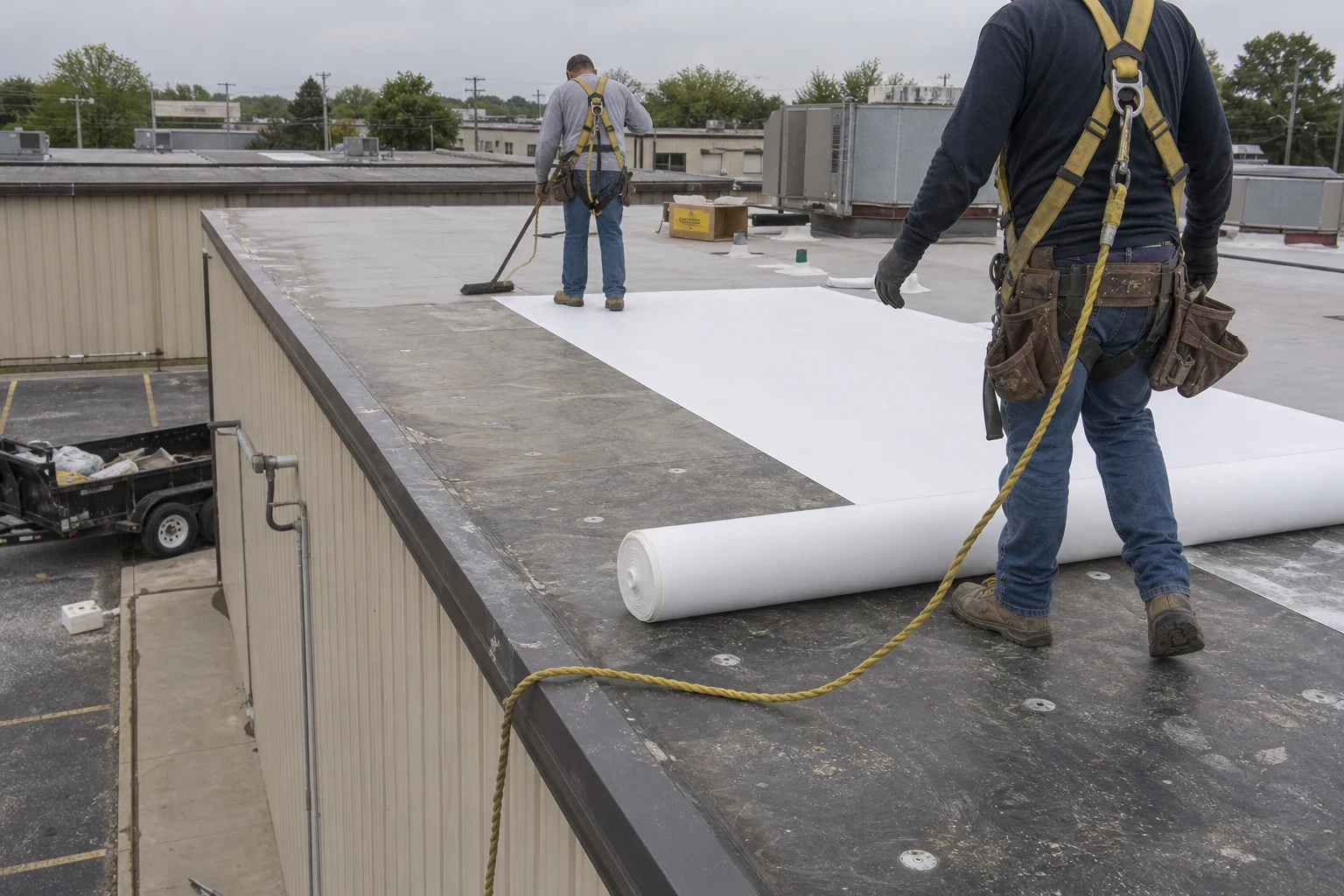
- We install TPO, EPDM, modified bitumen or a metal system, depending on your building and budget. Curbs, walls, pipes and rooftop units all get new flashing.
- Edges, drains and cleanup
- New edge metal, scuppers and drain parts finish the roof. We clear debris and run a magnet over the lot each day for screws and nails.
Signs your building is due for a new roof
Leaks that keep moving
You fix one spot and water shows up ten feet away. That usually means water is traveling through wet insulation under the membrane.
Water that sits for days
Puddles that stay 48 hours after rain point to a sagging deck or crushed insulation. Standing water speeds up wear on every type of membrane.
Blisters, splits and open seams
Bubbles in built-up or modified roofs, and seams pulling apart on single-ply, mean the roof is losing its bond. These spread with each heat and cold cycle.
Hail fractures
Hard hail can crack aging membranes and crush the insulation below. The damage is easy to miss from the ground, so it is worth having someone walk it.
Stained ceiling tiles and rusty deck
Brown tiles and rust you can see from inside tell you water has been getting in for a while.
How the work goes
- 1
Roof walk and samples
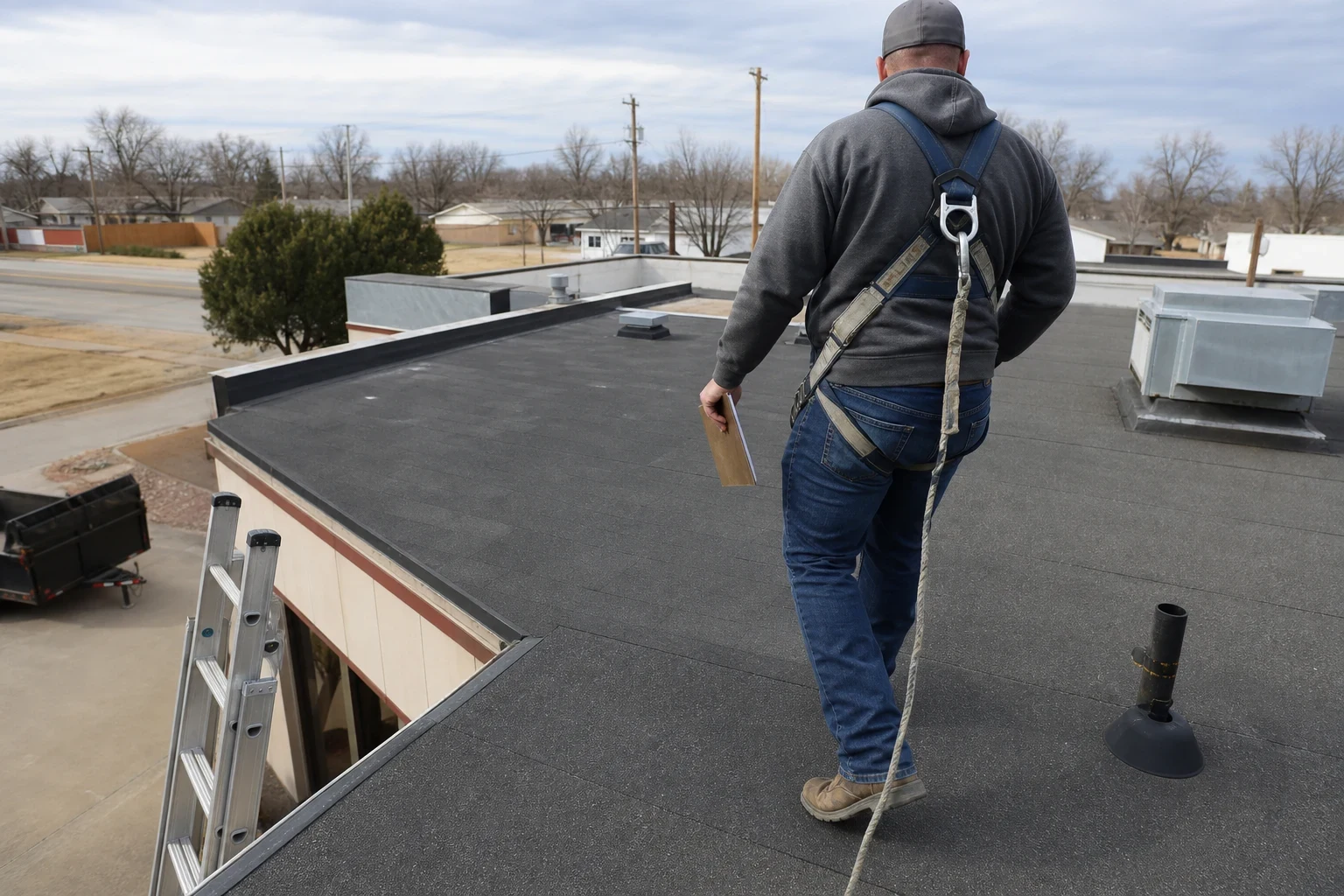
We walk the whole roof, take core cuts and photos, and look at the inside of the building for stains and rust. You get to see what we saw.
- 2
Written scope and quote
You get a line-item quote that spells out tear-off, deck work, insulation, membrane and flashing. Deck repair is listed by the sheet so there is no guessing later.
- 3
Permit and schedule
We pull the permit and set a schedule around your business. We can work in sections so only part of the roof is open at a time, and each section is sealed before the crew leaves.
- 4
Install and final walk
Crews tear off, repair, insulate and install section by section. When it is done, we walk the roof with you and go over drains, flashing and anything we want you to keep an eye on.
What sets the price
Every commercial roof is priced on its own. We will not give a number until we have been on the roof and cut samples. Here is what moves it most.
- Size and shape
- Square footage drives material and labor. Lots of curbs, walls and rooftop units add flashing time.
- What is under the old roof
- Wet insulation and rotted or rusted deck have to be replaced. Two old layers mean a full tear-off.
- Membrane choice
- TPO, EPDM, modified bitumen and metal each cost different amounts and last different lengths of time. We will explain the tradeoffs for your building.
- Drainage changes
- Tapered insulation or added drains cost more up front but stop the ponding that shortens roof life.
- Access and phasing
- Tight lots, tall walls or working in small sections around open hours can add crane time and labor days.
Commercial roof replacement questions
Something not covered here? (405) 422-9816
Can my business stay open while you replace the roof?
In most cases, yes. We work in sections and seal each one at the end of the day. Noise and some smell are part of it, so we talk through timing with you before we start.
Do I need a full tear-off or can you go over the old roof?
It depends on how many layers are there and whether the insulation is wet. Our core cuts answer that. If it is dry and there is only one layer, a recover can save money.
Which membrane is best for my building?
There is no single best one. TPO reflects heat well, EPDM handles movement, modified bitumen is tough underfoot, and metal works on low-slope buildings with enough pitch. We match it to how your roof drains and how much foot traffic it gets.
Will insurance pay for a new roof after hail?
Sometimes. It comes down to whether the hail actually broke the membrane or crushed the insulation. We document what we find with photos and can explain the claim process, but your adjuster makes the call.
Do you work outside Purcell?
Yes. We replace commercial roofs in Norman, Moore, Noble, Blanchard and other towns nearby. The Service Areas page lists them.
Find out what your roof really needs
We will walk it, cut samples and tell you straight whether it is time to replace or if a repair will hold. You get a written scope before anything starts.