ServicesRoof Inspections
Roof Inspections in Purcell, OK
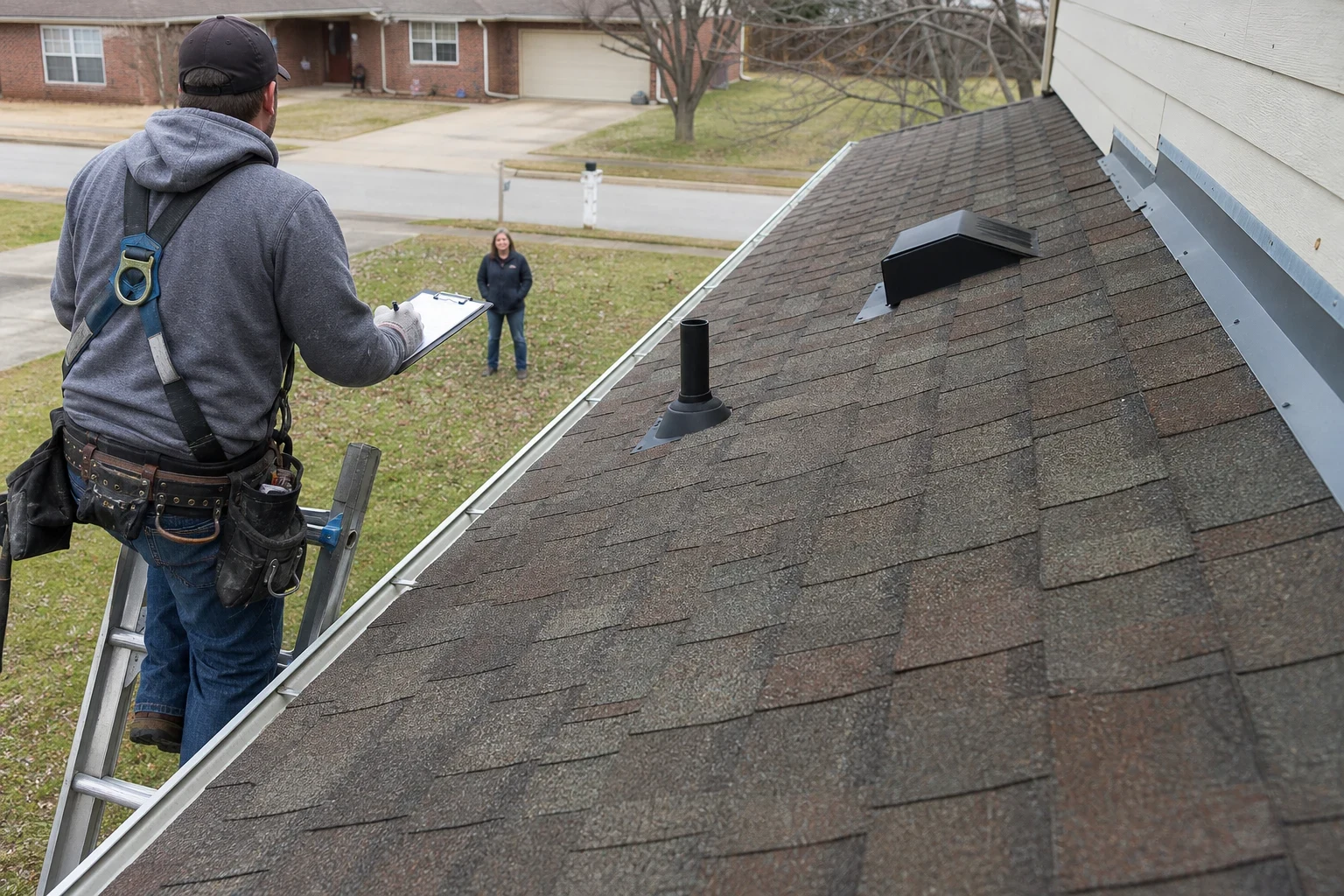
Our crew climbs up, checks each slope that's safe to stand on, and takes pictures of anything that looks off. Then you hear plainly whether your roof needs work, what kind and how soon. When nothing is wrong, that's exactly what we tell you.
Why have your roof looked at
From the yard, a damaged roof often looks perfectly normal. Hail can bruise a shingle without breaking it. A strong gust can pop the seal on a row of tabs, and they settle back flat afterward. Chimney flashing loosens bit by bit over the years. You won't spot any of it standing on the lawn.
Getting the roof checked makes sense right after a storm, when a house is being bought or sold, or once the roof has some age on it. With the spring hail and summer wind we get around Purcell, a look after bad weather catches small trouble before it spreads into the decking and ceilings.
We climb up, take photos and give you the answer we'd want for our own place. Some days that means a minor repair. Some days it means you don't need a thing.
The parts of your roof we go over
- 01
Shingle condition
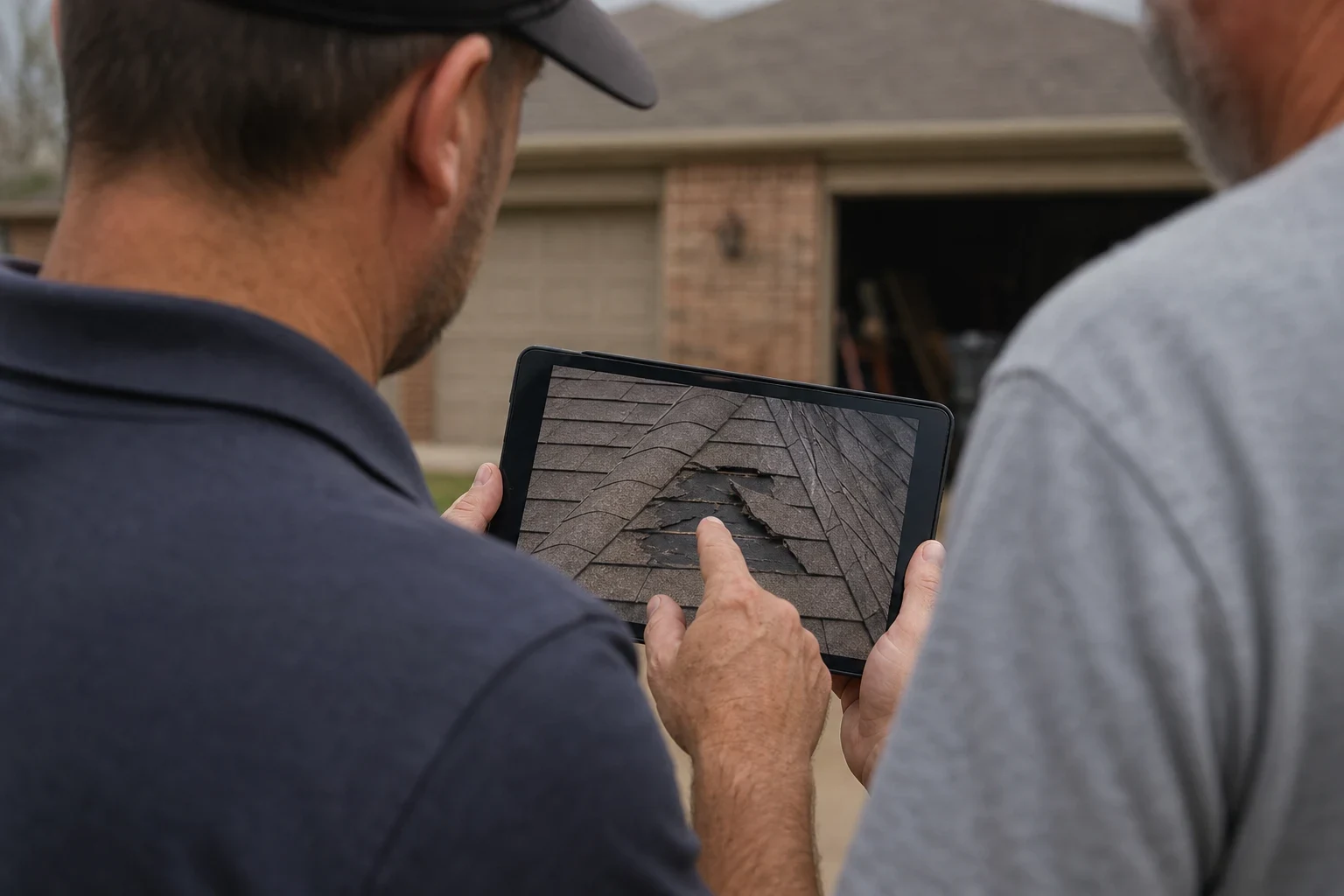
Hail bruises, cracked or torn tabs, worn patches where the granules are gone and edges that have lifted all get noted. We mark each hail hit with chalk so the photos show it clearly.
- 02
Flashing and pipe boots
Most leaks begin where the roof meets a chimney, a wall, a vent or a plumbing pipe. We check the sealant, the fasteners and the rubber boots, which tend to split after a few hot summers.
- 03
Soft decking
As we cross each slope, we pay attention to any give underfoot. A spot that feels spongy usually means the wood under the shingles is wet or rotting.
- 04
Attic and ventilation
With access, we look inside for water marks, light showing through and wet insulation. An attic that doesn't breathe bakes the shingles from underneath and wears them out early.
- 05
Gutters and runoff
Gutters that are packed full or sagging send water back under the roof edge. We write down hail dents, loose hangers and downspouts that empty right next to the foundation.
- 06
Pictures for your records
Everything we found comes to you in photos with a plain explanation, so you can see the problem yourself and hold on to proof of it.
Questions about Roof Inspections?
Call(405) 422-9816Signs it's time to have your roof checked
Hail or high wind came through
Even if nothing looks wrong. Check your car, fence and mailbox for dents. If they took hits, the roof likely did too.
Grit piling up at the downspouts
Sand-like granules in the gutters mean the shingles are wearing out or got hit.
Stains on a ceiling
A brown ring or damp spot means water is getting in somewhere. The leak is often a few feet away from the stain, not right above it.
Missing or curling shingles
Shingles in the yard after a windy night, or edges curling up, mean the seal has let go.
An older roof
Most asphalt roofs start showing real wear in their second decade. A check tells you how much life is left so you can plan instead of getting caught off guard.
What happens when we come out
- 1
A quick phone call first
Let us know what caught your eye and when the last bad storm rolled through. We settle on a time that works for you. Attic access helps, so mention if someone can be there to open up.
- 2
A walk around the house
Before the ladder goes up, we circle your home and check the roof edges, gutters, siding and screens for hail or wind marks. What we see down there points us to the spots that need a closer look.
- 3
On top of the roof
We cover each slope that's safe to stand on, checking shingles, flashing, vents and valleys and taking pictures along the way. If a roof is too steep or too brittle to walk, we inspect from the ladder and the edges.
- 4
Going over the results
We pull up the photos and give you a plain answer: leave it alone, fix it, or start planning a replacement. If storm damage turns up, we explain how an insurance claim usually plays out so nothing catches you off guard. You make the call.
What affects the cost of an inspection
An inspection is a lot less work than a repair, but no two roofs take the same time. We'll go over the cost with you on the phone before we schedule. These are the things that change it.
- Size and shape
- A simple two-slope roof goes faster than one with lots of valleys, dormers and hips.
- Pitch and access
- Steep roofs need extra safety gear and more time. A tall two-story house or a tight lot slows the setup.
- Attic check
- Going into the attic adds some time, and it often tells you more than the roof surface does.
- What the report is for
- A quick look after a storm is different from a detailed write-up with photos of every slope for a home sale or an insurance claim.
Questions homeowners ask about inspections
How much time does an inspection take?
Plan on an hour or two for most homes. A big or steep roof takes longer, and so does an attic check. Before we pack up, we sit down with you and go over what we saw.
Will this turn into a pitch for a new roof?
It won't. A sound roof gets a plain answer that it's sound. A roof with a small problem gets a small fix. We only talk about replacement when the pictures show worn-out or badly damaged shingles, and you look at those pictures right alongside us.
Do I call my insurance company before you come out?
That's up to you. Plenty of homeowners would rather see what's on the roof before they open a claim. We can point out any storm damage and walk you through how claims usually go. What gets covered is the adjuster's call, not ours.
Does someone have to be at the house?
We can check the roof with nobody home. For the attic, we need someone to open the door for us. Afterward, we go through the photos with you face to face or on the phone.
How often is a roof check worth doing?
A roof in good shape can go a few years between checks. Any time hail or hard wind hits, get it looked at again. In Oklahoma, the end of spring storm season is a good time to put it on the calendar.
What if you turn up a leak?
We'll show you the spot, explain what's letting water in and tell you what fixing it takes. Smaller problems are handled as roof repair. If a storm caused it, our storm damage repair page lays out how that work runs.
Find out what's really up there
Tell us what you've seen and we'll set a time to look. You'll get photos and a straight answer on what your roof needs.